
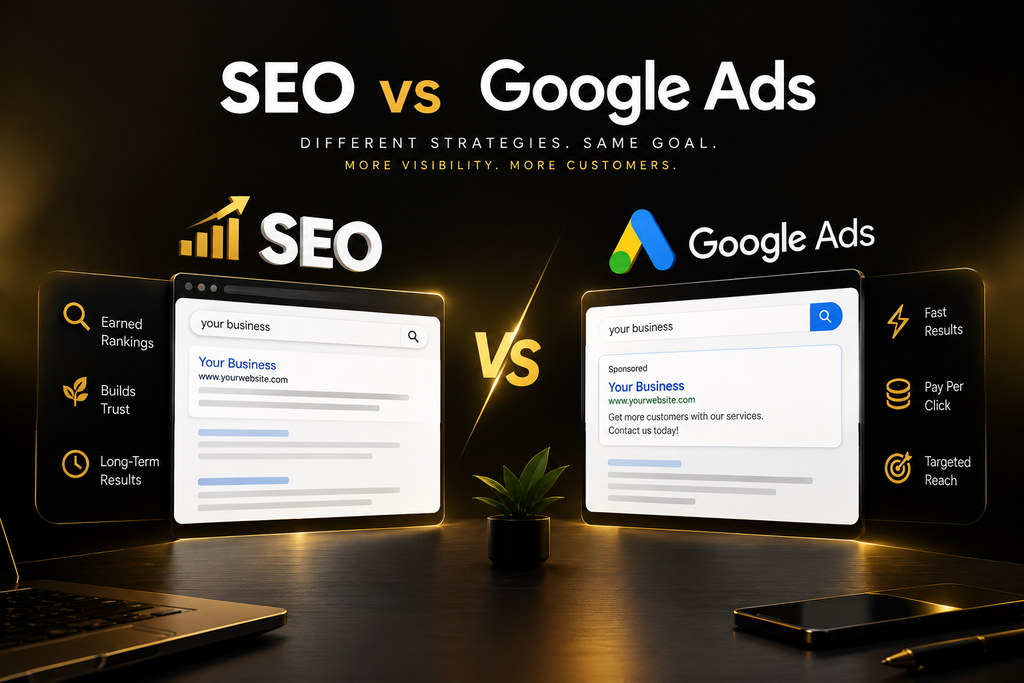
SEO or Google Ads: Which One Your Business Should Use?
SEO vs Google Ads is an important decision for businesses that want to increase their online visibility and attract more customers. SEO helps businesses generate organic traffic through search engine rankings, while Google Ads can provide faster visibility through paid advertising. Understanding the difference between SEO and Google Ads can help you choose the right strategy for your business goals and budget.
Here is the short answer: SEO and Google Ads solve problems. SEO builds visibility over time. Google Ads buys visibility immediately.
A quick note on where I’m coming from. I am gaining hands-on experience in SEO and Google Ads through practice projects. I will not make up traffic numbers or client revenue to impress anyone. What I can share is the framework I use, the mistakes I see often, and what I have learned from planning strategies for a service busines
If you are looking for digital marketing services, you can explore my digital marketing services here.
SEO vs Google Ads: What’s the Difference?
SEO means improving a website so it appears in the search results. Google Ads means paying to show an ad at the top of the results per click.
That is the core difference between organic and paid traffic. Organic visitors come from rankings earned by SEO. Paid visitors come from Google Ads. When comparing SEO vs Google Ads, businesses should consider their budget, goals, and expected timeline.The choice between SEO vs Google Ads depends on whether a business needs immediate traffic or long-term organic growth.
| Factor | SEO | Google Ads |
|---|---|---|
| Speed | Slow often months | Fast can start in days |
| Cost model | Time and effort upfront | Pay per click |
| Longevity | Keeps working after the work is done | Stops when budget stops |
| Control | Limited rankings are not guaranteed; | you set budget and targeting |
| Best for | Long-term growth | Quick wins testing offers |
Organic Traffic or Paid Traffic: When Each One Wins
When SEO makes sense
SEO fits when you can be patient, and customers search for what you offer. If people look up your service every week, ranking for those searches can bring visitors without paying for each click. Over time, SEO will also rely on paid traffic.
When Google Ads makes sense
Google Ads works well when you need leads, want to promote an offer, or are targeting high‑intent searches. Someone searching “emergency plumber near me” is ready to act. Showing up immediately matters more than waiting months to rank.
What I Learned From a Practice Project
My practice project involved a service business that wanted visibility and more potential customers. I did keyword research, picked long‑tail search terms, optimized on‑page elements, planned a Google Ads strategy around high‑intent searches, and reviewed the customer journey for conversion gaps.
This was not a live client campaign. I am not claiming results. It taught me that SEO and Google Ads work best as partners. Ads can show which keywords and offers attract people. SEO can then build lasting visibility around the ones that work.
How to Decide Between SEO and Google Ads: A 7-Step Framework
When a business asks me to choose, I do not recommend anything away. I walk through these steps first:
- Define the goal. Do you want leads, more traffic, local visibility, or long‑term growth?
- Know your audience. Who are your customers? What do they search for? How do they decide to buy?
- Research keywords. Check search volume, competition, and intent. Are people actively searching for what you sell?
- Check your budget. Google Ads needs spend. SEO needs time and consistent effort.
- Consider your timeline. Need visibility fast? Lean toward ads. Can you wait? SEO becomes more attractive.
- Study the competition. Look at both the results and the ads to see how hard it is to compete.
- Choose your strategy. Pick SEO, Google Ads, or a mix, based on what you found.
The point is to match the channel to the business, not the business to the channel.
8 Mistakes Businesses Make With SEO and Google Ads
Whichever route you take, watch out for these:
- Expecting SEO to deliver results immediately.
- Running Google Ads without keyword research or a clear audience.
- Chasing clicks, not sales.
- Bidding on keywords that burn budget.
- Sending paid traffic to a landing page.
- Copying a competitor’s choice without checking if it fits.
- Using one strategy for every type of business.
- Skipping conversion tracking so you cannot tell what works.
That last point hurts the most. Without tracking, you cannot tell what works.
One Tip You Can Use This Week
Choose three to five high‑intent keywords that match your products or services. Then check that your website pages, headings, and content clearly show those terms. If you use Google Ads, make sure your ads and landing pages match those terms well.
This small alignment makes SEO more relevant. Your ad traffic becomes more focused. It also shows which searches actually bring customers.
Can you use SEO and Google Ads together?
Yes. For businesses, SEO and Google Ads are a combination. Use Google Ads to gain visibility and test keywords. Use SEO to build a foundation that continues to work. Remember that Google says paying for ads does not improve your rankings. The two channels need focus. Read Google’s guidance in the SEO Starter Guide.
Results differ by industry, competition, and budget. A niche service with competition may rank quickly while a crowded market may take longer.
FAQs
Is SEO better than Google Ads?
Neither SEO nor Google Ads is better in every case. SEO is for long‑term growth while Google Ads is for results. The best choice depends on your goals, budget, and timeline.
How long does SEO take to work?
It can vary. SEO is generally slower than Google Ads. Expect to invest effort over months, not days.
Is Google Ads worth it for businesses?
Google Ads can be valuable for high‑intent searches as long as you.
The choice between SEO vs Google Ads depends on how quickly you need results and how long you want those results to last.
Ultimately, SEO vs Google Ads isn’t about choosing one strategy for every business.